
Automatic Floor Scrubber Buyer's Guide
Quick answer
Match the scrubber to your floor area and floor type. Under about 10,000 sq ft per hour of cleaning, a 20" to 28" walk-behind usually fits; above that, a 32" to 38" walk-behind or a rider pays for itself in labor. Choose a disk deck for smooth floors and a cylindrical deck for grouted, rough or uneven floors, and pick battery, corded or engine power based on where the machine will run.
Shop walk-behind scrubbersShop rider scrubbers Not sure? Call 800-440-6723 or get a recommendation.
Why scrub instead of mop?
For years the mop and bucket was the only way to clean floors, and it's still common. But it isn't efficient or sanitary. The cleaning solution is quickly contaminated as the mop touches the dirty floor and goes back in the bucket, so before long you're spreading dirty water. Mopping can't clean grout, leaves dirt on baseboards, "wipes" without real pressure to deep clean, and takes a long time on large areas. That's why most businesses switch to an automatic floor scrubber.
How an automatic scrubber works
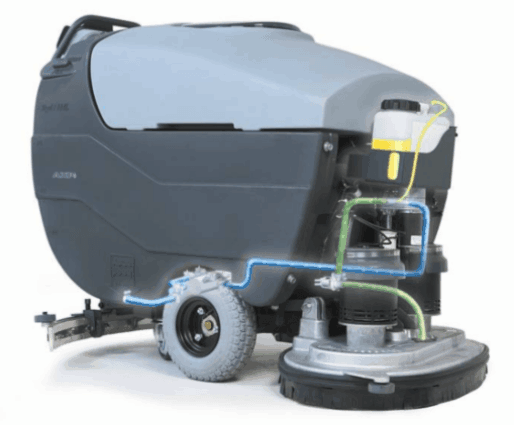
An auto scrubber uses two tanks so clean water always reaches the floor: one for clean solution and one for dirty water. The solution system delivers water and chemical, the scrubbing system cleans the floor, and the recovery system uses a squeegee and vacuum to pull dirty water into the recovery tank.
Scrubbers run on battery, corded electric or an engine. Engine scrubbers are large industrial riders that run on liquid propane, gasoline or diesel.
Choose the right size for your cleaning area
A scrubber that's too small for the space costs you labor every day. Use this chart as a starting point; actual numbers vary by manufacturer.
| Scrubber size | Realistic sq ft per hour | Minutes per 1,000 sq ft |
|---|---|---|
| 20" | 8,300 | 7.2 |
| 24" | 9,900 | 6 |
| 26" | 10,300 | 5.8 |
| 28" | 10,900 | 5.5 |
| 32" | 12,750 | 4.7 |
| 38" | 17,000 | 3.5 |
| Rider 38" | 24,680 | 2.4 |
Solution system
The solution tank holds water and chemical and delivers it to the floor by gravity feed or pump feed. Because dirty water is collected in a separate tank, it never contaminates your cleaning solution.
Scrubbing system: disk vs. cylindrical
Disk scrubbing
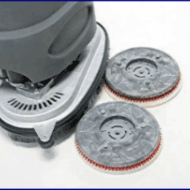
Best for smooth floors, with more down pressure than a cylindrical deck. Runs pads or brushes: pads clean smooth floors better and come in many aggressiveness levels, but need regular replacement, so brushes can be the better value on some floors.
Cylindrical scrubbing
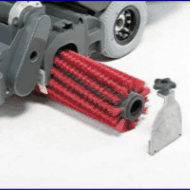
Best for grouted, rough and uneven floors, but costs more. Pre-sweeping usually isn't needed because the cylindrical brushes also do light sweeping.
Comparing all three deck styles, including orbital? See disk vs. cylindrical vs. orbital scrubbers.
Recovery system and squeegee blades
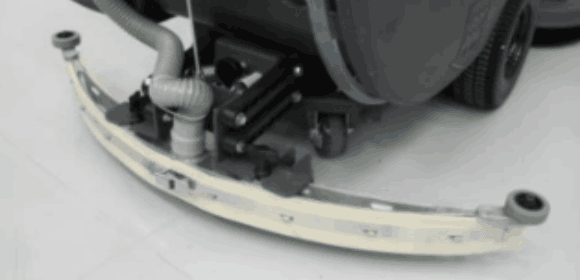
The rear squeegee wipes up the dirty water and seals so the vacuum can pull it into the recovery tank. Choose the blade for your floor:
- Gum rubber: most economical; good on smooth floors but wears quickly on rough floors.
- Linatex: a good choice for floors with heavy petroleum-based soil, like factories.
- Polyurethane: most expensive, with the best abrasion resistance.
Propulsion
Micro-scrubbers are pushed manually. Smaller scrubbers use pad or brush assist, where the pad or brush helps move the machine. Traction drive moves everything from small walk-behinds to riders with little effort.
Types of floor scrubbers
| Type | Tank size | Cleaning path |
|---|---|---|
| Micro scrubbers | 5-6 gallons | 17" or smaller |
| Small scrubbers | 6-15 gallons | 17"-24" |
| Midsize scrubbers | 16-25 gallons | 24"-34" |
| Large scrubbers | 25+ gallons | 26"-38" |
| Riding scrubbers | 20-100+ gallons | 24"+ |
Walk-behind scrubbers
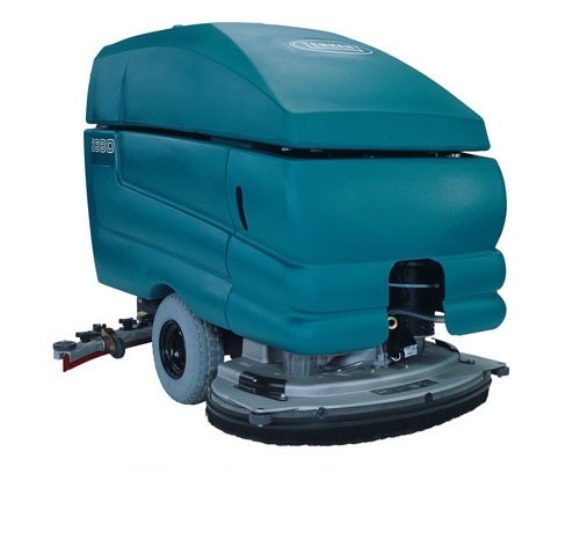
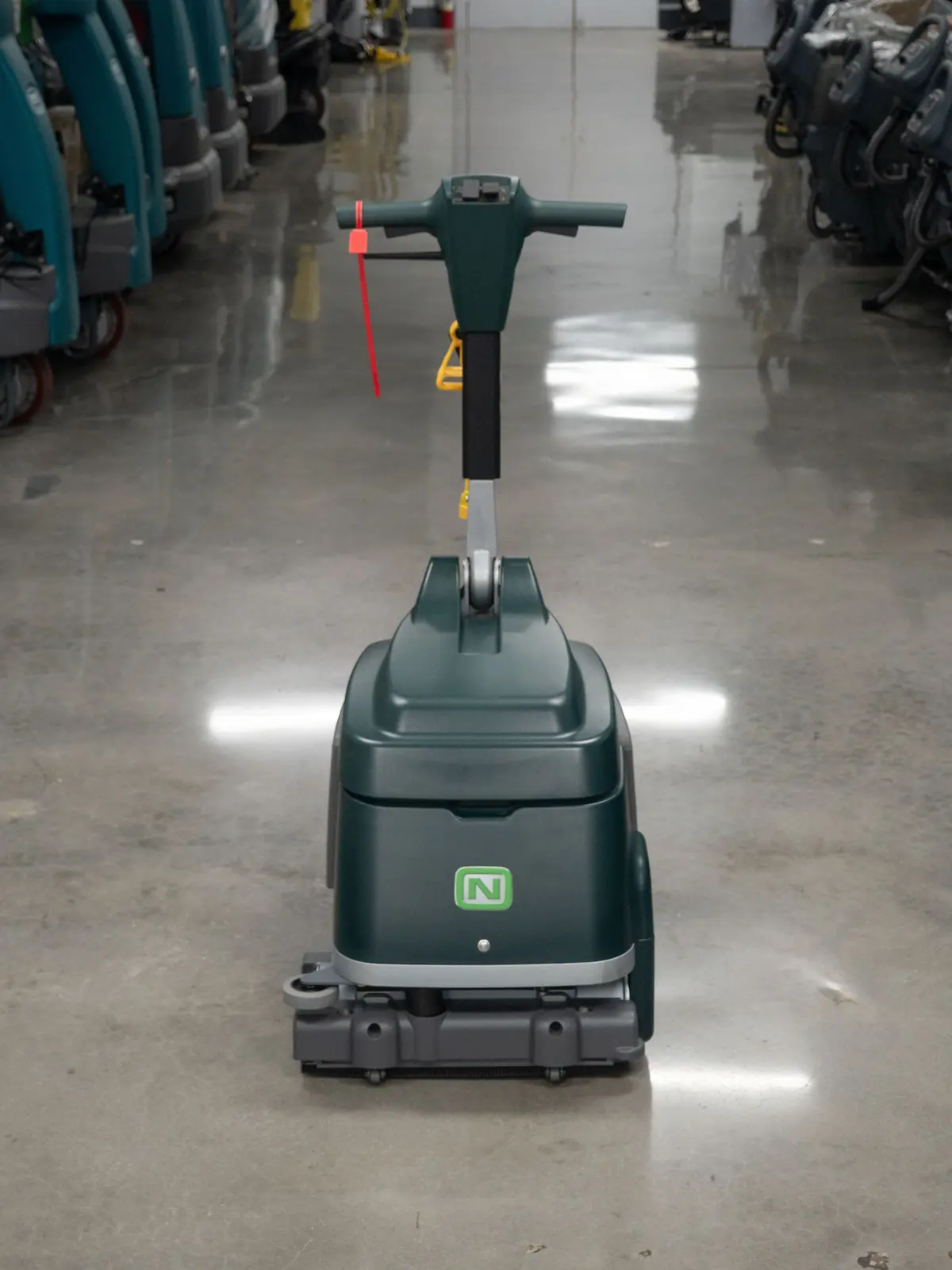
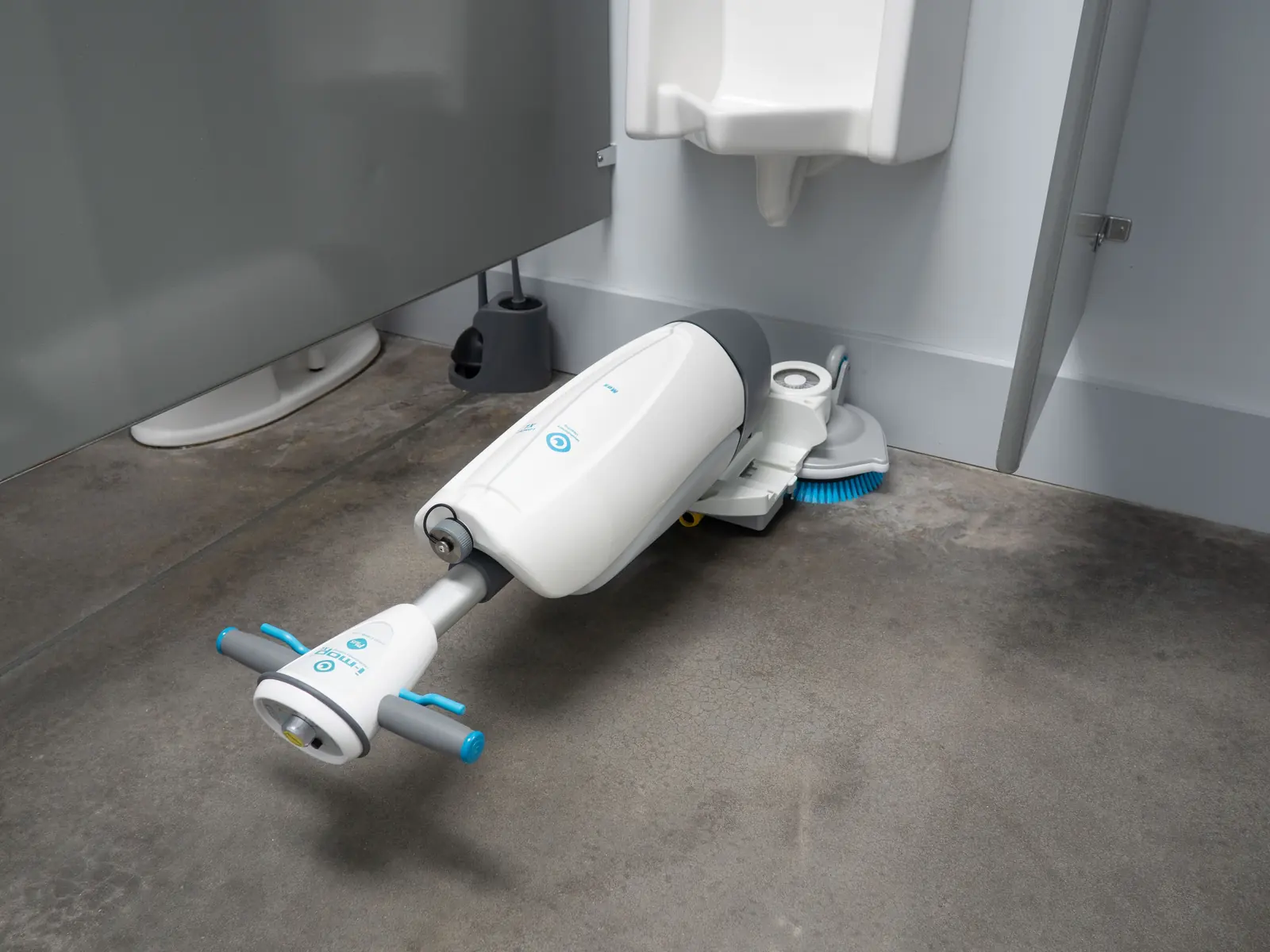
From micro-scrubbers (17" and under) for small areas like restrooms to 26"+ machines that cover large areas quickly.
Pros: many sizes; battery or corded options on smaller units; great for small spaces.
Cons: large areas take longer and can tire operators; corded units are limited by cord length; limited sightlines.
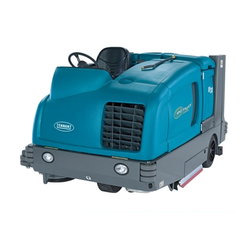
Rider scrubbers
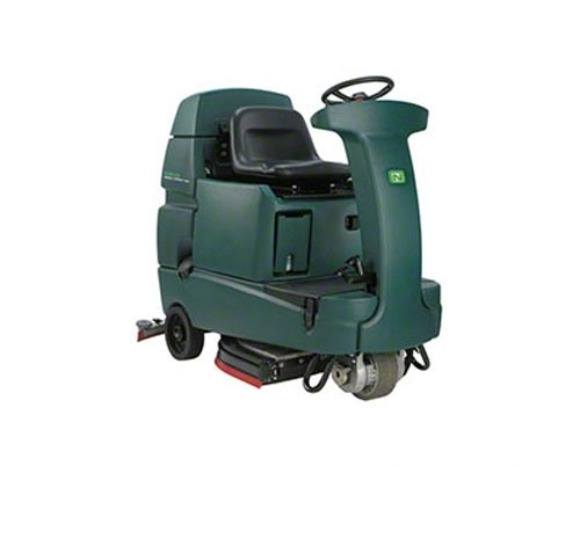
Built for productivity, usually 24"+ cleaning paths with large recovery tanks. Battery powered and easy to use, they clean large areas very fast.
Pros: high productivity; maneuverable; better sightlines from the front seat.
Cons: need a dedicated charging and storage area; not built for small spaces.
Chemical-free scrubbing
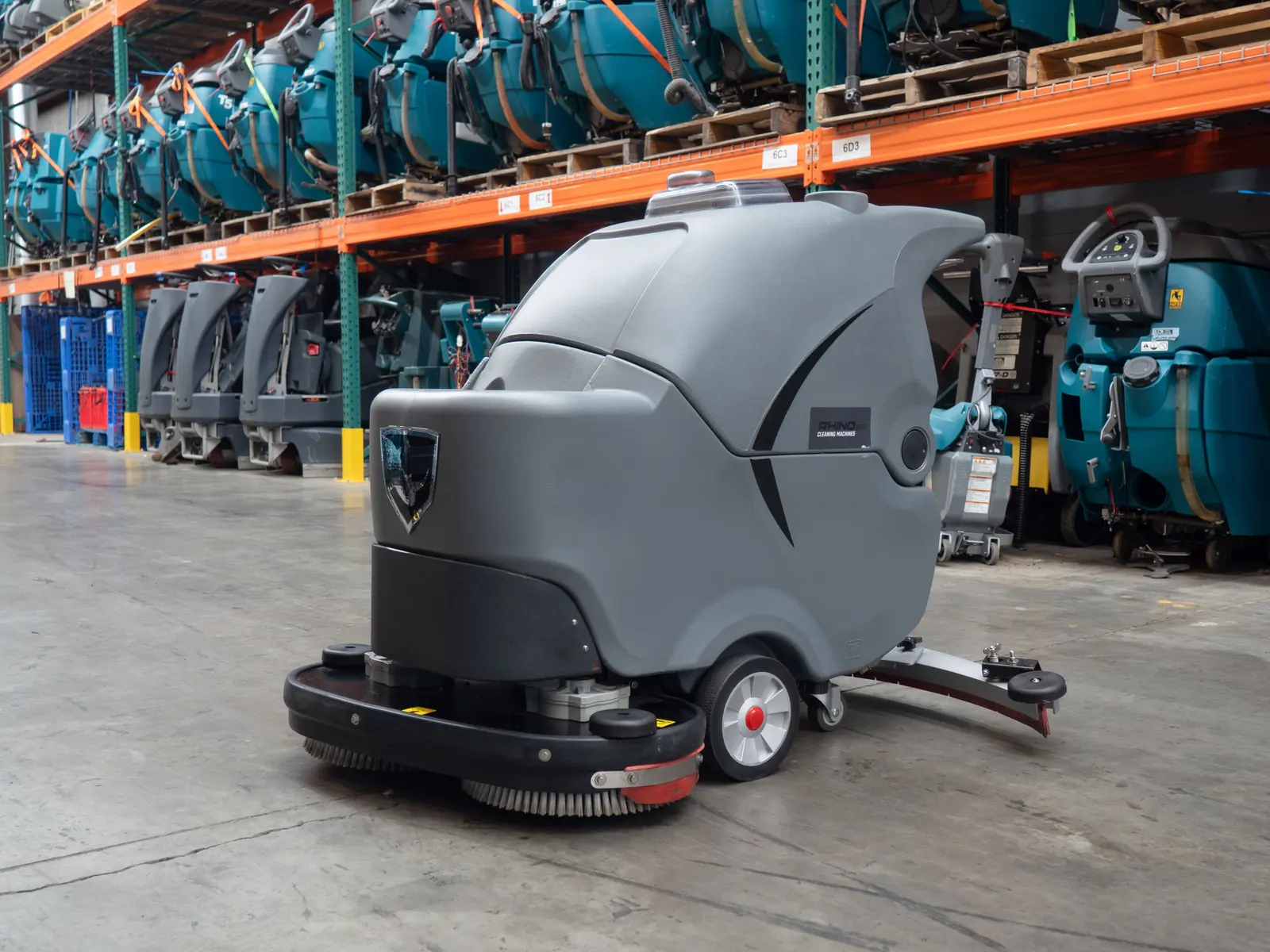
Chemical-free scrubbing is a newer option. For example, ec-H2O technology electrically converts water into a cleaning solution. Testing has shown it removes soil effectively while significantly improving floor traction, and scrubbers with this technology can clean up to three times longer on a single tank.
Pros: save on chemicals, better for the environment, improved floor traction. Cons: higher initial cost.

Save with reconditioned and demo scrubbers
An SES certified reconditioned scrubber is torn down, rebuilt and tested by factory-trained techs and usually sells for 50% or more off new, with a 90-day parts, 30-day labor warranty. Demo units are current models with light hours.
Floor scrubber FAQ
What size floor scrubber do I need?
Estimate your square footage and how fast it needs to be cleaned. A 20" walk-behind realistically cleans about 8,300 sq ft per hour, a 32" about 12,750, and a 38" rider about 24,680. Go bigger if labor time matters.
Disk or cylindrical scrubber?
Disk decks are best on smooth floors and apply more down pressure. Cylindrical decks are better on grouted, rough or uneven floors and also lightly sweep, so pre-sweeping usually isn't needed.
Which squeegee blade should I use?
Gum rubber is the economical choice for smooth floors, Linatex handles petroleum-based soil, and polyurethane offers the best abrasion resistance at a higher price.
Battery, corded or engine?
Battery is the most flexible for most facilities. Corded works for small areas near outlets. Engine-powered (LP, gas or diesel) scrubbers are large industrial riders.
Want help choosing?
Tell us your floor type and square footage and we'll recommend the right scrubber.